Written by Andrew Qualy, MSW, LICSW, LCSW · Reviewed September 2026
Online depression therapy in Colorado is counseling for depression held by secure video with a therapist licensed in Colorado, while you are physically in the state. It covers the same ground as office-based counseling, and it can suit people who find it hard to get out the door, live far from a provider, or want to start without a commute.
Who Online Depression Therapy Can Suit
Depression is common. The National Institute of Mental Health estimates that "21.0 million adults in the United States had at least one major depressive episode" in 2021, which "represented 8.3% of all U.S. adults" (NIMH). Many of those people never sit in a waiting room, for reasons that make sense: low energy, a schedule that does not bend, or simply not wanting to be seen walking into an office.
Telehealth can be a good fit if:
- Getting there is part of the problem. On a heavy day, a session you can join from the couch is a session you are more likely to keep.
- You live outside the metro. Colorado is a big state. Counselors with the right focus may be hours away from a mountain town, the Eastern Plains or the Western Slope.
- Your schedule is tight. Shift work, caregiving or a long commute leave little room for travel time.
- You want privacy. No parking lot, no lobby, no one from work in the next chair.
It may not be the right fit if you have no private space at all, if your connection is unreliable, or if you need a higher level of care than weekly outpatient counseling. A first conversation is the place to sort that out together.
Is It Depression or a Hard Stretch?
You do not need to be sure before you reach out. Low mood that comes and goes with what is happening around you is part of being human. Depression tends to hang on: a flat or heavy mood, losing interest in things you used to care about, sleeping or eating much more or less, trouble concentrating, and a sense that nothing will change. When several of these last most of the day for two weeks or more, it is worth talking with a professional.
Our guide to depression vs. sadness goes through the differences in more detail. Only a qualified clinician can assess what you are experiencing, and a primary care provider can help rule out physical causes such as thyroid or sleep problems.
What Online Depression Sessions Look Like
Online sessions follow the same structure as in-person counseling. The difference is the room you sit in.
- A first assessment. We talk through what has been going on, how long, what has helped or not helped before, and what you want to be different. This is also when you decide whether the fit feels right.
- A plan you shape. Goals are set together, in plain language. You can change them as you go.
- Approaches matched to you. Cognitive Behavioral Therapy looks at the link between thoughts, mood and what you do day to day, such as the pull to withdraw that tends to deepen low mood. Acceptance and Commitment Therapy helps you take small steps toward what matters to you, even while the heaviness is still there.
- Between-session steps. Small, realistic experiments, like a short walk or one message to a friend, sized for the energy you actually have.
- Regular check-ins. We look at what is shifting and what is not, and adjust.
There is no fixed number of sessions and no promised outcome. The pace is set together.
What You Need at Home
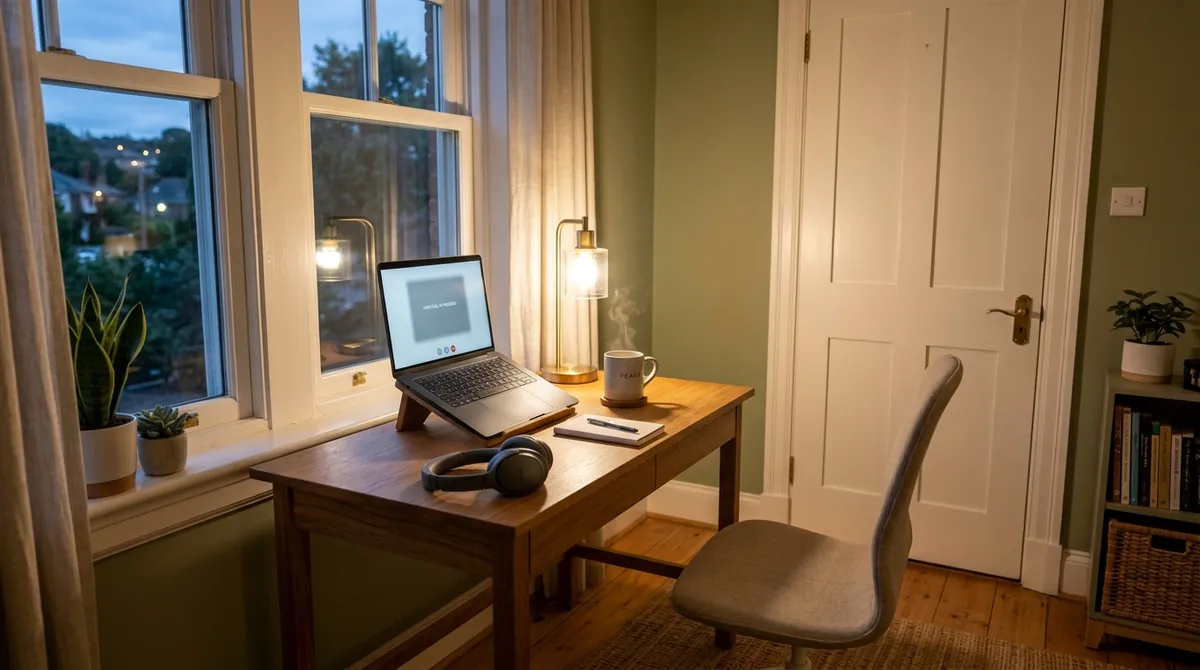
You do not need special equipment. For a telehealth session you need:
- A private space where you will not be overheard. A bedroom, a parked car or a closed office all work.
- A phone, tablet or computer with a camera and a stable internet connection.
- Headphones if other people are home.
- To be physically in Colorado during the session. Counselors are licensed by state, and the rule follows where you are sitting, not where you live. If you travel out of state, let your therapist know ahead of time.
The teletherapy page covers how to set up a private space and plan for a dropped connection.
How to Choose an Online Therapist for Depression in Colorado
Searching for a therapist while you are depressed can feel like one more thing you cannot face. A few questions narrow it down quickly:
- Are they licensed in Colorado? Look for a license type and number you can check with the Colorado Department of Regulatory Agencies.
- Do they work with depression regularly? Ask how they approach it and which methods they use. You should get a clear answer in everyday language.
- Do they understand your context? If your low mood is tied to military service, first responder work or healthcare, it can help to work with someone who does not need the culture explained.
- Are the fees clear? You should be able to see rates and in-network plans before booking. Ours are listed on the fees page, including the Colorado plans we accept.
- Can you talk first? A short consultation lets you hear how they work before you commit. Ours is a free 15-minute call.
At Forge Resilience Counseling, sessions are held by telehealth only, for adults 18 and older who are physically located in Colorado or Minnesota during the session. You can join from Denver, the Front Range suburbs, a mountain town or the Western Slope. In-person sessions are not offered at this time. You can read more about online therapy in Colorado and how it works across the state.
If You Need Help Right Now
If you are having thoughts of suicide or of hurting yourself, please do not wait for a scheduled appointment. If you are in immediate danger, call 911 or go to the nearest emergency room. You can call or text the 988 Suicide & Crisis Lifeline at 988 at any time.
Taking the Next Step
Depression often tells you that reaching out will not help, or that you should be able to handle it alone. You do not have to settle that question before asking. If you are in Colorado and want to talk about depression counseling, you are welcome to book a free consultation. A first conversation can be short, and you decide whether and how to move forward.